Essential Steps After Joint Surgery

25 February 2022  ·  Dr. Ion Bogdan Codorean

Essential Steps After Joint Surgery
After orthopaedic surgery, wherever it was performed and for whatever purpose, protection and rehabilitation during the healing process are essential. Following a few basic protective recommendations from specialists can make the difference to the success of the treatment.

Protecting the joint after surgery

Keeping the muscles in condition through regular physical activity must be done within optimal parameters, at minimal intensity, at least in the first months after surgery. Strong muscles help maintain the stability of the joint and reduce the risk of further injury, and the muscular structures around the joint serve to absorb the impact it takes. It is recommended that the exercise programme be established with the help of an orthopaedic surgeon and a rehabilitation physician; otherwise there is a risk that the patient will overdo it and set back the health of the joint once again. Maintaining an optimal weight through a healthy diet is another way of protecting the joints, since exceeding the weight limits recommended by the doctor places considerable pressure on them. During walking, for example, each knee supports a force equivalent to 3 to 6 times body weight. When the figures exceed normal parameters, the joints are subjected to constant stress that can cause previous conditions to flare up again. Correct body position is another consideration, as poor posture affects the health of the joints, particularly those of the neck, legs and hips, as well as the spine. Extra care is needed when the patient lifts or carries something. It is also worth noting that when lifting a heavy object, it is advisable to use the body's main muscle groups, bending the knees without straining the back muscles.

Rehabilitating the joint after orthopaedic surgery

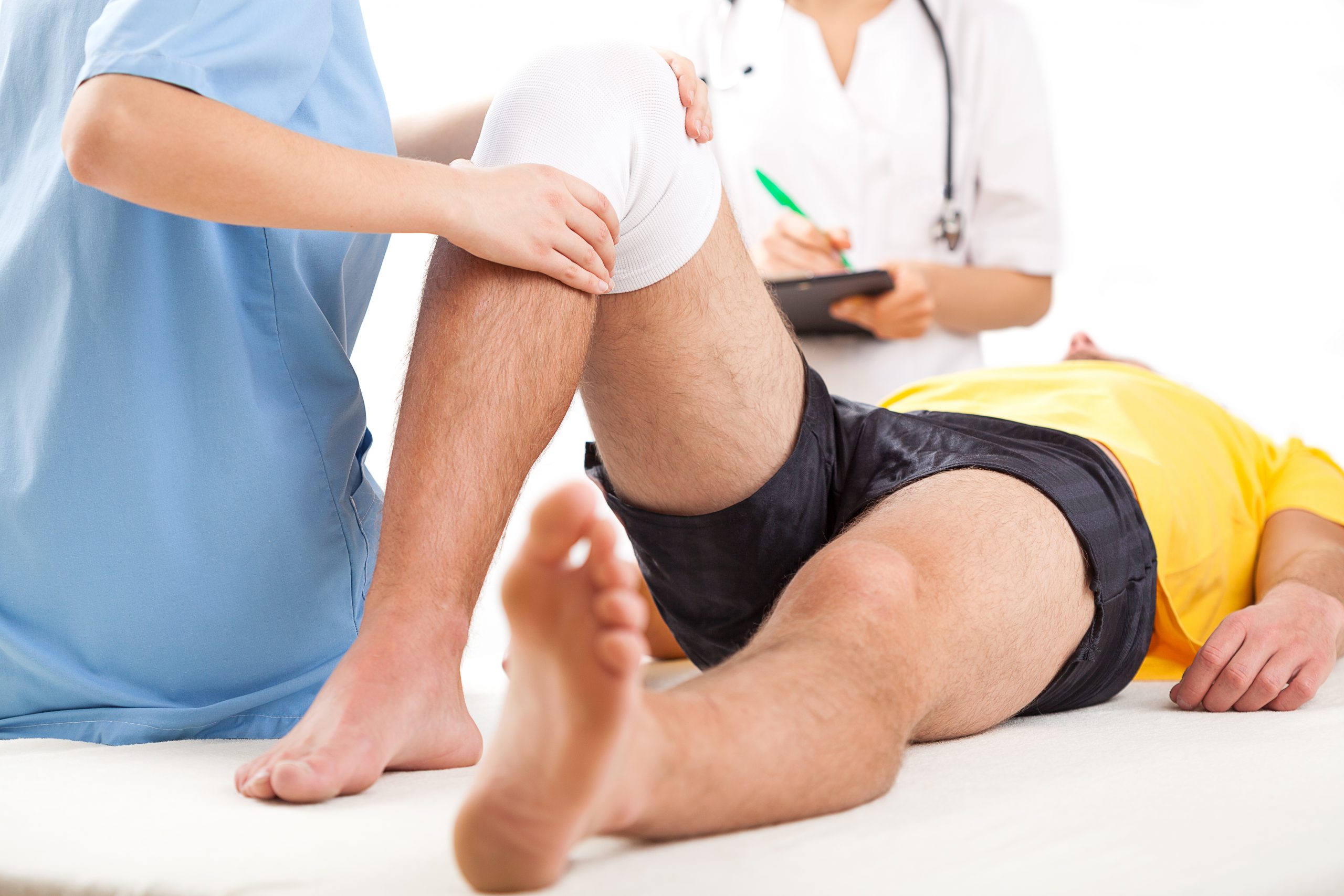
As regards joint rehabilitation after surgery, physiotherapy sessions are recommended, with the aim of strengthening weakened muscles and regaining mobility in the joint. In the first two weeks after the operation the emphasis will be on the least demanding exercises, with the use of a brace or crutch, applying ice packs, basic hygiene and wearing comfortable clothing all being essential aspects of the first period after surgery. The patient then progresses gradually to the exercise ball and the stationary bike, or to other exercises that increase gently in intensity, such as raises, curls or extensions of the affected limbs. The role of this stage is to avoid overloading, promoting healing alongside the recovery of mobility and the strengthening of the muscles. The next stage involves stretching exercises, followed by additional exercises depending on the patient's needs and the joint being rehabilitated (chair squats, wall slides, leg press, resisted lunges or step-up exercises). Consulting an orthopaedic surgeon is recommended at any sign of joint instability or pain, in order to establish a treatment plan appropriate to the severity of the problem. After surgery it is essential to follow the rehabilitation programme drawn up with the orthopaedic surgeon and the rehabilitation physician. The success of rehabilitation is directly proportional to how strictly and carefully the specialist's instructions are followed. The medical examinations to be carried out during the rehabilitation process consist of a standard schedule of visits at 3 weeks, 6 weeks, 3 months, 6 months and one year.

PRP, hyaluronic acid and stem cell injections

Finally, modern methods of stimulation such as injections are used to accelerate the process of joint regeneration. Injections are given at the affected site, delivering substances essential to the healing and repair process. There are three broad categories of injection, depending on the substance chosen: PRP injections, hyaluronic acid injections and stem cell injections. PRP injections (PRP — Platelet-Rich Plasma), also known as platelet-enriched plasma injections or autologous conditioned plasma preparations, are a treatment for musculoskeletal conditions, with the substances injected into the joint. Although platelets are best known for their role in stopping bleeding, they are rich in regenerative factors. Plasma highly concentrated with platelets produces a pro-inflammatory biological response at the injection site, which plays a role in tissue regeneration. In effect, instead of using various pharmaceutical products, the growth factors from the patient's own blood are used to tackle chronic joint conditions, as well as in post-traumatic and post-surgical tissue regeneration. Hyaluronic acid injections work by stimulating the production of synovial fluid in the knee, of which hyaluronic acid is a component. Synovial fluid allows the knee joint to move smoothly by lubricating it, so that the bones do not rub together. It acts as a means of absorbing the impact the knee takes. In severe forms of musculoskeletal conditions the fluid is present in abnormally small quantities, and hyaluronic acid is used to restart the process of generating synovial fluid. Stem cell injections are probably one of the most modern methods of treating orthopaedic and musculoskeletal conditions. In essence, stem cells underpin the development of all organisms, playing a principal role in embryology and in the repair of tissue and wounds. In orthopaedics, mesenchymal stem cells obtained from bone marrow and adipose tissue are used. Most stem cells are found in adipose tissue. Injecting them into the affected areas leads to the stem cells transforming into specialised cells, and they are used in regenerative musculoskeletal and joint therapy for bone. The method is minimally invasive and painless, and the body benefits from a healing process driven by its own cells.  
Back to Blog Book a Consultation
Medically reviewed content
Dr. Ion Bogdan Codorean
About the author

Dr. Ion Bogdan Codorean

Consultant in Orthopaedics and Traumatology · Doctor of Medicine

A specialist with over 20 years of experience in arthroscopic surgery, sports traumatology and complex ligament reconstruction. Founder of the Artro Sport Clinic in Bucharest.

ArthroscopyLigamentsMeniscusShoulderSports Traumatology

Comments

What Our Readers Say

Nu există comentarii încă. Fii primul!

Lasă un comentariu
Va fi publicat după aprobare
Call Book Now