
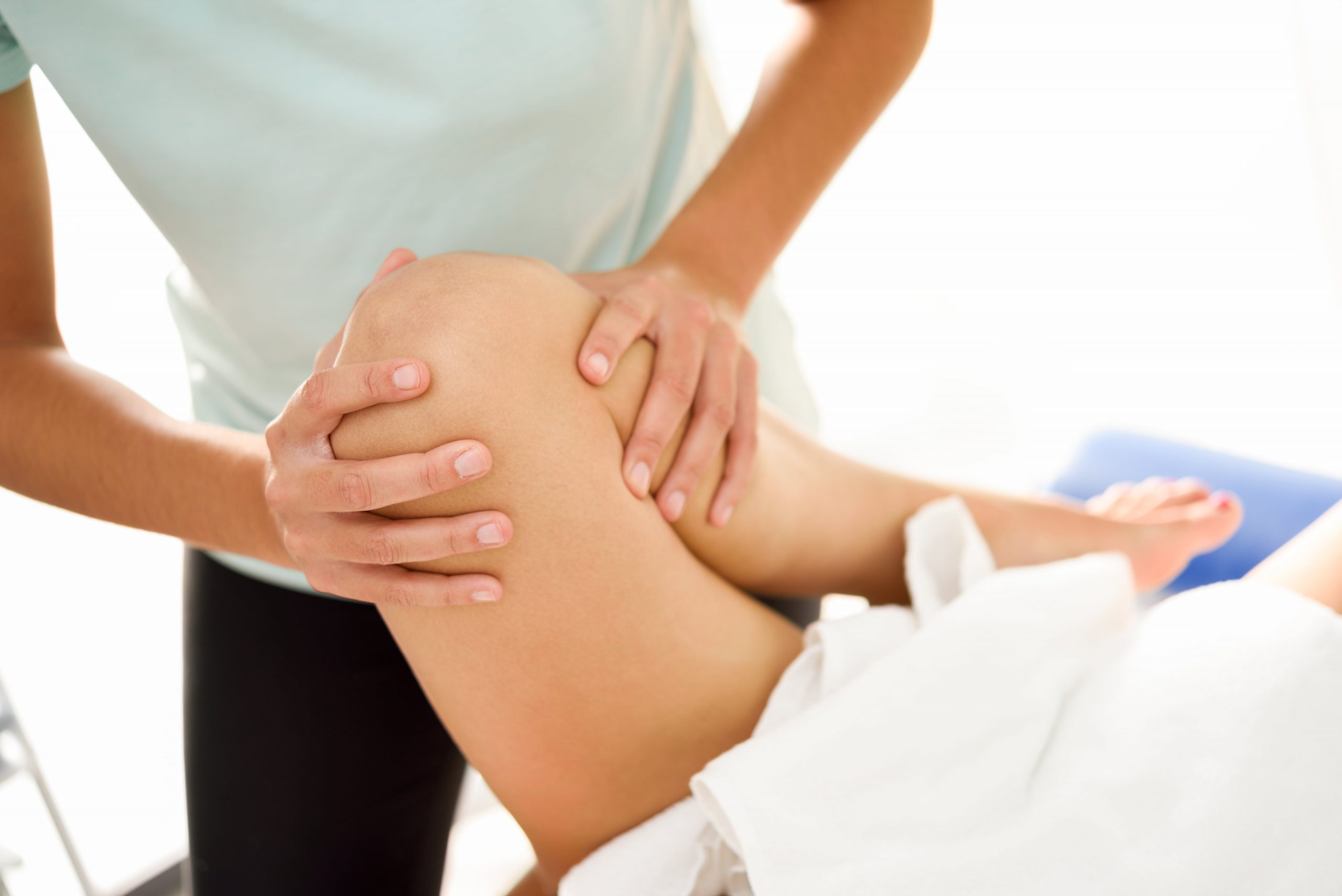
Advancing age and genetic predisposition lead to conditions such as knee osteoarthritis. In some cases the classic treatment methods bear fruit, but in advanced stages surgery is recommended. Specifically, for problems of this kind, knee replacement surgery (total knee arthroplasty) is considered.
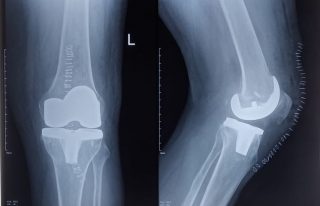
A knee prosthesis is a device that gives the patient the chance to regain mobility. It significantly reduces the pain caused by knee osteoarthritis by replacing the damaged articular cartilage. In essence, the femoral and tibial components are covered in metal, and the spacer between them in a special plastic that allows the knee to flex and extend.
The operation takes approximately 1–2 hours. Patients can most often walk with the aid of a frame from the day after surgery — it is a safe and effective procedure that eliminates pain and corrects deformity of the leg.
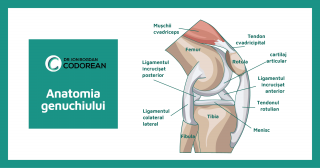
The anatomy of the knee
The anatomy of the knee consists broadly of 3 components: the lower end of the femur, the upper end of the tibia and the kneecap (patella). Where these 3 structures meet, the surfaces are covered by articular cartilage. The cartilage is smooth, protects the bones and allows them to move easily.
Then, between the femur and the tibia, there are 2 "C"-shaped structures called the menisci. They work by absorbing the shocks to which the knee joint is subjected.
If the knee is working healthily, all these parts work in harmony, allowing fluid movement. When a serious injury occurs, or a condition such as knee osteoarthritis, this harmony is disturbed and pain, reduced muscle strength and diminished mobility appear.
Types of knee prosthesis
There are two kinds of prosthesis: partial (also called unicompartmental) and total (also called tricompartmental). A partial prosthesis replaces only the affected parts of the knee, while a total prosthesis replaces the knee completely.
There is also another way of describing the types of knee prosthesis. Those based on the system for fixing to bone can be cemented or uncemented.
When a total knee replacement is recommended
Total knee replacement is suggested when it is established quite clearly that the patient is suffering from a condition such as knee osteoarthritis.
The key signs that may lead to the condition being suspected, and to the decision to operate, relate to constant knee pain and stiffness. This means interference with ordinary activities such as walking, climbing stairs, and getting in and out of a car. The pain increases more and more while walking, to the point where you feel the need for a stick or something to lean on.
Other symptoms can be knee pain that does not ease at rest, and deformity of the knee (the knee bowing inwards or outwards). Nor should we forget the signs that do not go away. If, despite conservative treatment such as anti-inflammatory medication, intra-articular injections and physiotherapy, there is no improvement, then surgery is recommended.
The knee replacement operation
One important point is that the patient receives various recommendations several weeks before the operation:
The first recommendation concerns medication. Where possible, stop aspirin 5 days before the operation. Anticoagulant treatments such as Plavix or Sintrom must be mentioned to the doctor from the outset, so that they can be stopped before the replacement surgery. Cardiac treatments are only altered following discussion with, and on the recommendation of, a cardiologist. The patient should give the specialist a list of all the medicines they take, the list being handed over at the pre-anaesthetic consultation.
Patients are asked not to eat or drink anything for 8 hours before the operation. The patient's knee is positioned so that the surgeon can easily reach all the ligaments. Anaesthesia is applied from the waist down and an incision of 15–20 cm is made. The damaged surfaces of the articular cartilage are removed along with a small part of the bone underneath. Once removed, metal implants are fitted that recreate the surface of the joint (most often they are cemented into the bone). A plastic spacer is added between the metal components to provide a smooth gliding surface. Before closing the incision, the surgeon will move the patient's knee gently to test the mobility of the prosthesis.
Recovery after knee replacement surgery
Rehabilitation is necessary after knee replacement surgery. The hospital stay generally lasts 2 days, and the patient is encouraged to walk with the aid of a frame from the day after the operation. Pain medication is personalised and adapted to each individual patient, and intravenous antibiotics are given for 24 hours after surgery.
Anticoagulant medication is also given for around 30 days after the operation. A physiotherapist will work with the patient daily and teach them how to walk safely and which movements they are allowed to make. Follow-up appointments with the doctor take place at 14 days, 45 days, 3 months, 6 months, 1 year and annually thereafter.
Rehabilitation exercises
The rehabilitation protocol is essential to the success of an operation of this kind. Rehabilitation exercises begin immediately after the procedure and are aimed in the first instance at strengthening the muscles around the prosthesis. Physiotherapy begins the day after surgery, where you will initially use passive mobilisation devices designed to help with gentle stretching and bending movements. The exercises include ankle flexion and extension, active extension of the knee, active flexion of the knee, and movements to restore balance. In general, the types of rehabilitation exercise are tailored to each patient's needs.
FAQ:
Q: How long does a knee replacement operation take?
A: The operation takes approximately 1–2 hours, and patients can most often walk with the aid of a frame from the day after surgery.
Q: When does the prosthesis need replacing?
A: Over time the prosthesis can wear, which creates the need for a revision prosthesis. Modern prostheses are extremely durable, but there is a chance that replacement will be needed after 15–20 years.
References:
Yvet Mooiweer, Martin Stevens - Being active with a total hip or knee prosthesis: a systematic review into physical activity and sports recommendations and interventions to improve physical activity behavior - European Review of Aging and Physical Activity
Insall J, Tria AJ, W N Scott - The total condylar knee prosthesis: the first 5 years - Clinical Orthopaedics and Related Research, 01 Nov 1979, (145):68-77
Ernesto C. Martinez-Villalpando, Hugh Herr- Agonist-antagonist active knee prosthesis: A preliminary study in level-ground walking - Journal of Rehabilitation Research & Development
Am proteza la un genunchi, din 25.05.2021, dar am încă dureri. Care poate fi cauza?
Bună ziua! Cauza poate fi stabilită numai în urma unei examinări. Vă aștept la Artro Sport Clinic pentru a vedea despre ce este vorba.
Buna ziua..am o problema la care nu mai stiu cum sa o rezolv si ce sa cred .Am facut opretie de proteza la genunchi in 2019 in Italia..am facut 40 de zile de fizioterapie ..aveam dureri dar dupa asa un intervent mi se parea ceva normal dar durerea nu a incetat nici acum. Merg normal indoi genunchiul . Am facut ecografii ..am mers la chirurgul care ma operat..am mers chiar si la in alt medic ortoped dar mi-au zis ca nu am nimic.Ca si intervent e facut bine ..proteza e bine pozitionata..problema e ca pe mine ma doare in jurul genunchiului ca si cum m-ar taia cu cutitul ...nustiu cum sa va zic...carnea ..muschii..o durere ce persista zi si noapte..cand merg merg cu durere..iau mereu antiiflamatoare.E posibil sa fi facut lichid ?..pentru ca mi se umfla .Ce ar trebui sa fac ..pt ca rezonanta magnetica nu mai pot face...la ce riscuri sunt expusa..??..mie f frica nustiu ce sa mai cred.Va multumesc pt un eventual raspuns..
Bună ziua! Un diagnostic poate fi stabilit numai în urma unei consultații, iar apoi vi se recomandă tratamentul potrivit. Vă aștept la Artro Sport Clinic pentru o examinare.
Buna ziua am 2 saptamini de cind am primit o proteza la piciorul sting si am o problema nu pot sa merg in siguranta fara ajutorul cirjelor Ce sa fac mai departe ca am dureri foarte mari ??? Va multimesc Lg
Bună ziua! O recomandare poate fi făcută doar în urma unei examinări. Vă aștept la Artro Sport Clinic pentru a vedea despre ce e vorba.
dupa cat timp inceteaza durere la un genunchi protezat total
cât costă o proteza de genunchi eate decontate de C A S .Daca ai proteza la genunchi te poți pensiona?
Bună ziua! În cadrul clinicii Artro Sport nu lucrăm cu Casele de Asigurări de Sănătate. Pentru mai multe detalii despre costul operațiilor, vă rog să sunați la spitalul Medicover. Date de contact pe https://www.medicover.ro/contact/. Vă mulțumesc! O zi bună!
Buna ziua! Sant operata am proteza totala genunchi din 2023 As dori sa stiu ce proceduri am voie la recuperare ?
Bună ziua! Aveți voie orice fel de procedură la genunchiul protezat, dar acest lucru se discută cu medicul de recuperare.
Buna ziua am o proteza unicompartimentala genunchi stang ,interventia chirurgicala e de 5 saptamani e unflat genunchiu si am dureri e nomal?
Bună ziua! Un anumit grad de hidartroză și durere este normală postoperator. Trebuie să vorbiți cu medicul care v-a operat sau vă așteptăm la clinica Artro Sport pentru o evaluare corespunzătoare. Ne puteți contacta telefonic la 021-9885 sau online pe https://artrosport.ro/contact/. Mulțumesc! O zi bună!
Bună ziua.Am fost operată în decembrie 2024.Am proteză totală la genunchi.Au trecut 2 luni și nu pot îndoi genunchiul mai mult de 60 grade. Fac fizioterapie dar nu e nici o îmbunătățire.Doctorul mi a făcut programare în 30 martie pt o îndoire forțată cu anestezie.As dori părerea dumneavoastră. Mulțumesc
Bună ziua! Pentru a vă putea ajuta, vă recomandăm să stabiliți o programare pentru o consultație la unul dintre medicii noștri ortopezi. În urma unei evaluări amănunțite aceștia vă vor putea oferi îndrumarea necesară. Ne puteți contacta telefonic la 021-9885 sau online aici: https://artrosport.ro/contact/. O zi bună!
Bună dimineața sunt operată deprotez totală de genunchi stâng de 2 săptămâni și îmi fuge piciorul în timpul mersului cu cadrul .Da ce?
Bună ziua! Pentru a vă putea oferi îndrumarea potrivită, vă încurajăm să stabiliți o programare pentru o consultație la Clinica Artro Sport. Este important să fie evaluat de un medic ortoped pentru a primi tratamentul adecvat. Ne găsiți în București, pe strada Vasile Lascăr nr. 216-218, sector 2. Ne puteți contacta telefonic la 021-9885 sau online pe: https://artrosport.ro/contact/. Vă așteptăm! O zi bună!