
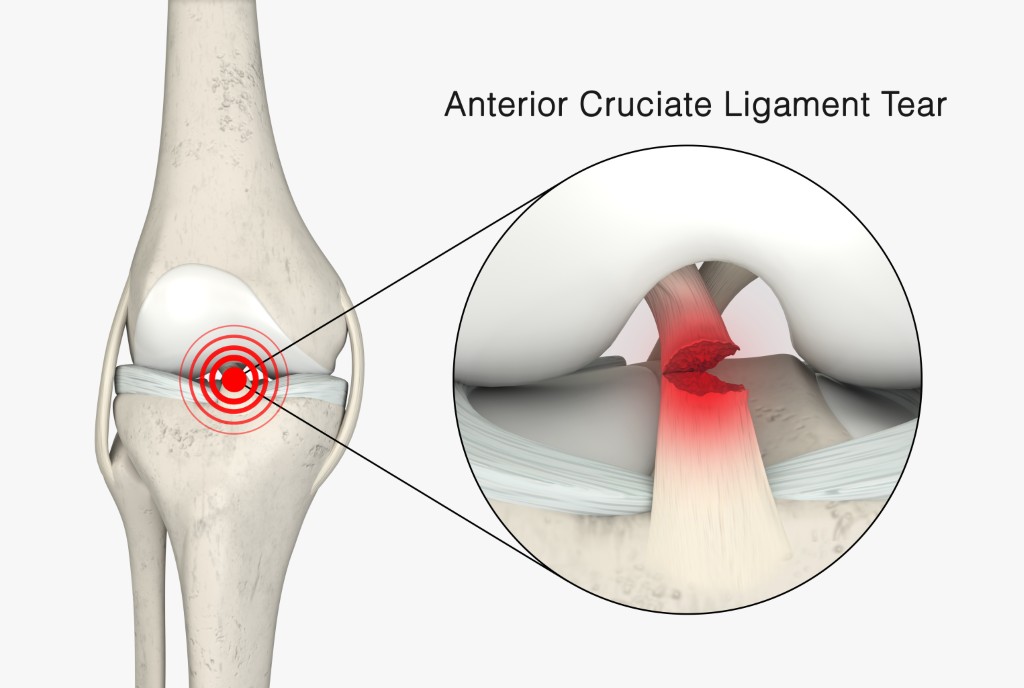
What is an anterior cruciate ligament (ACL) tear?
The anterior cruciate ligament (ACL) is one of the four main ligaments that stabilise the knee joint, providing stability during activities involving sudden changes of direction, jumping or rapid stops. An ACL tear occurs when this ligament is subjected to an increased force that exceeds its capacity to withstand it. ACL tears are common in sports such as football, basketball, skiing and tennis, but they can also occur in everyday life, following an accident or a fall. The injury can range from a stretch or partial tear to a complete rupture, which leads to instability of the knee. If not treated appropriately, ACL tears can lead to long-term complications such as osteoarthritis. Depending on a number of factors, treatment can range from conservative therapy to surgery. ACL repair surgery is recommended for acute tears where the ligament stump is intact.Diagnosing an ACL tear
Diagnosing an ACL tear begins with a clinical assessment by the doctor, who will review the patient's history and carry out a series of clinical tests. Some of the most common tests used to assess instability of the knee are the Lachman test, the pivot shift test and the anterior/posterior drawer test, which can be used to identify uncontrolled movement in the joint. To confirm the diagnosis, the doctor may recommend a 1.5 or 3 Tesla MRI scan, which gives a clear picture of the state of the ligament and of other structures in the knee, such as the menisci and the cartilage. X-rays are taken to rule out other bone injuries. Following these investigations, the doctor will be able to establish the severity of the tear and the best treatment plan.The symptoms of an ACL tear
An anterior cruciate ligament tear is accompanied by a number of symptoms. One of the most common signs is a "popping" sensation in the knee, which may be heard or felt at the moment the ligament tears. Immediately afterwards the patient feels intense pain that is difficult to control, followed by swelling of the knee joint. Besides pain, another essential feature of an ACL tear is instability of the knee. Patients often describe a feeling that the knee "gives way" or can no longer support their body weight, particularly while walking or changing direction. This instability makes everyday activities difficult and can prevent normal walking. Another important symptom is restricted movement of the knee in the period immediately after the injury. Flexion and extension become painful and restricted, affecting the ability to fully bend or straighten the leg. A build-up of fluid (effusion) inside the knee can make this restriction worse, increasing the discomfort.When ACL repair surgery is recommended
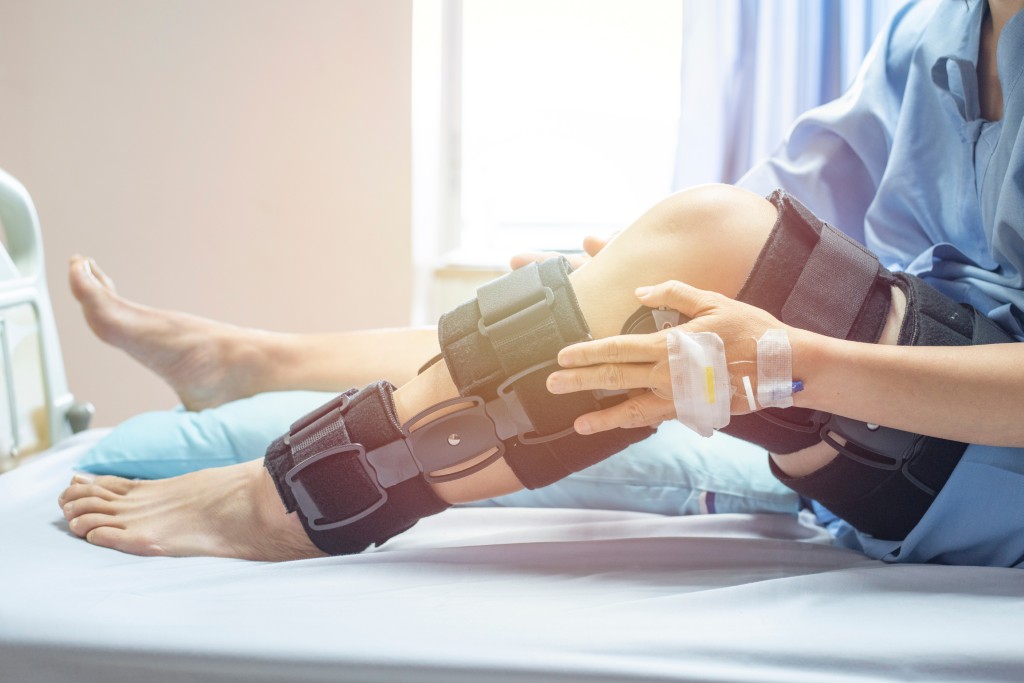 The anterior cruciate ligament is the only ligament that cannot heal on its own. When it tears, it can be either repaired or reconstructed, depending on the patient's age and on how long ago the injury occurred, as well as its location and type.
Surgery to repair or reconstruct the anterior cruciate ligament is usually recommended when the tear is complete, or when instability of the knee is severe and cannot be managed with conservative treatment. Active patients in particular — those who play sport or whose working life involves physical effort — are often advised to opt for surgery.
Surgery is also indicated when the patient wishes to return to a high level of physical activity, since a torn cruciate ligament cannot heal on its own. Conservative treatment, involving physiotherapy and wearing a brace, can be effective for older people or for those with a low level of activity, but it cannot provide the stability needed by those who wish to take part in intense sport.
The decision to operate is also taken on the basis of the risk of long-term complications. If the knee remains unstable, the risk of developing additional injuries to the menisci or the cartilage increases significantly.
There are newer, less invasive methods of repairing and augmenting ligaments, such as the "Preservation First" approach. This allows the patient to avoid, at least initially, a major intervention such as anterior cruciate ligament reconstruction, with a faster recovery period and fewer troublesome postoperative symptoms. You can find more details about anterior cruciate ligament repair at https://gregorysdifelicemd.com/acl-preservation/.
The anterior cruciate ligament is the only ligament that cannot heal on its own. When it tears, it can be either repaired or reconstructed, depending on the patient's age and on how long ago the injury occurred, as well as its location and type.
Surgery to repair or reconstruct the anterior cruciate ligament is usually recommended when the tear is complete, or when instability of the knee is severe and cannot be managed with conservative treatment. Active patients in particular — those who play sport or whose working life involves physical effort — are often advised to opt for surgery.
Surgery is also indicated when the patient wishes to return to a high level of physical activity, since a torn cruciate ligament cannot heal on its own. Conservative treatment, involving physiotherapy and wearing a brace, can be effective for older people or for those with a low level of activity, but it cannot provide the stability needed by those who wish to take part in intense sport.
The decision to operate is also taken on the basis of the risk of long-term complications. If the knee remains unstable, the risk of developing additional injuries to the menisci or the cartilage increases significantly.
There are newer, less invasive methods of repairing and augmenting ligaments, such as the "Preservation First" approach. This allows the patient to avoid, at least initially, a major intervention such as anterior cruciate ligament reconstruction, with a faster recovery period and fewer troublesome postoperative symptoms. You can find more details about anterior cruciate ligament repair at https://gregorysdifelicemd.com/acl-preservation/.
How reconstruction surgery is carried out
Anterior cruciate ligament reconstruction is performed by replacing the torn ligament with a graft from another tendon. During the operation the surgeon creates bone tunnels through which the graft is introduced. It is then fixed with special anchoring devices, such as screws, which give the graft stability and allow the healing process to begin. The graft used to replace the torn ligament can come from three main sources: 1. an autograft (taken from the patient's own tendons, such as the patellar tendon or the semitendinosus tendon), 2. an allograft (taken from a donor), or 3. an artificial ligament (made from biocompatible synthetic materials). The surgeon anchors the graft in the femur and the tibia, recreating the structure of the original anterior cruciate ligament. The success of the operation depends on many factors, including the quality of the graft, the surgical technique used and the patient's commitment during the recovery period. After surgery, long-term success depends largely on the process of ligamentisation, through which the graft becomes functional. Ligamentisation is the biological process by which the graft introduced during surgery undergoes a series of transformations. Cells from the adjacent tissues migrate towards the graft, and this process stimulates the formation of new blood vessels, transforming the graft from a histological structure into a functional ligament. Although anterior cruciate ligament reconstruction has a high success rate, there are cases in which the ligament does not heal. The failure rate of the operation can be as high as 11%. There are also cases in which patients return to sport before the graft has fully healed, which can lead to complications. The patient's immune response can also affect the process of graft integration, contributing to its failure to become functional.The recovery process after surgery
Recovery after ACL repair surgery is a gradual process that can take more than 6 months, depending on the severity of the injury and the body's response to treatment. Recovery has several stages:- Giving up crutches, between 14 and 30 days;
- Starting light running, between 60 and 90 days;
- Returning to sport, between 6 and 12 months, once the patient passes the "safe return to sport" test.

Nu există comentarii încă. Fii primul!