
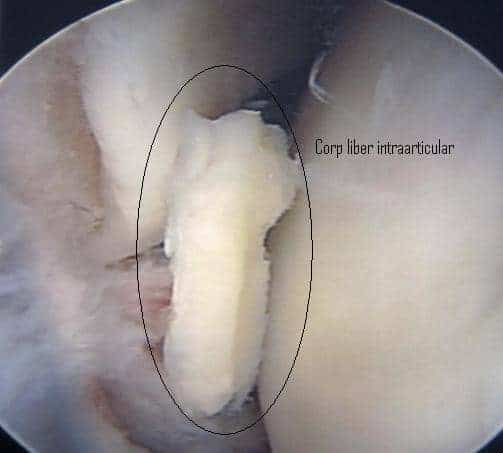
Autor : Dr. Ion Bogdan Codorean Corpii liberi intraarticulari au fost gasiti in orice articulatie din corp, dar cel mai frecvent la nivelul genunchiului. De fapt, prezenta lor a fost descrisa extensiv.
Written and medically reviewed by Dr. Ion Bogdan Codorean, senior orthopaedics-traumatology physician. Updated: August 15, 2026.
The main causes include osteochondritis dissecans (the most common), joint trauma with osteochondral fragmentation, advanced osteoarthritis with detached osteophytes, and synovial chondromatosis. Loose bodies grow progressively larger through the accretion of cartilaginous material and can block joint movement.
The characteristic symptoms are episodes of sudden joint locking — the knee locks in a particular position and cannot be extended or flexed. This is accompanied by acute pain, swelling and crepitus. Between locking episodes the knee may be symptom-free. X-rays and MR arthrography confirm the presence and location of the loose bodies.
The treatment of choice is arthroscopic removal of the loose bodies. The procedure is minimally invasive, with fast recovery and immediate relief of symptoms. At the same time, the underlying condition that generated the loose bodies is treated, to prevent recurrence.
Recovery after arthroscopic removal of loose bodies is fast — 2–4 weeks to return to normal activities. Return to sport takes place 4–6 weeks after surgery.
Dr. Codorean offers a precise diagnosis and a personalised treatment plan.