
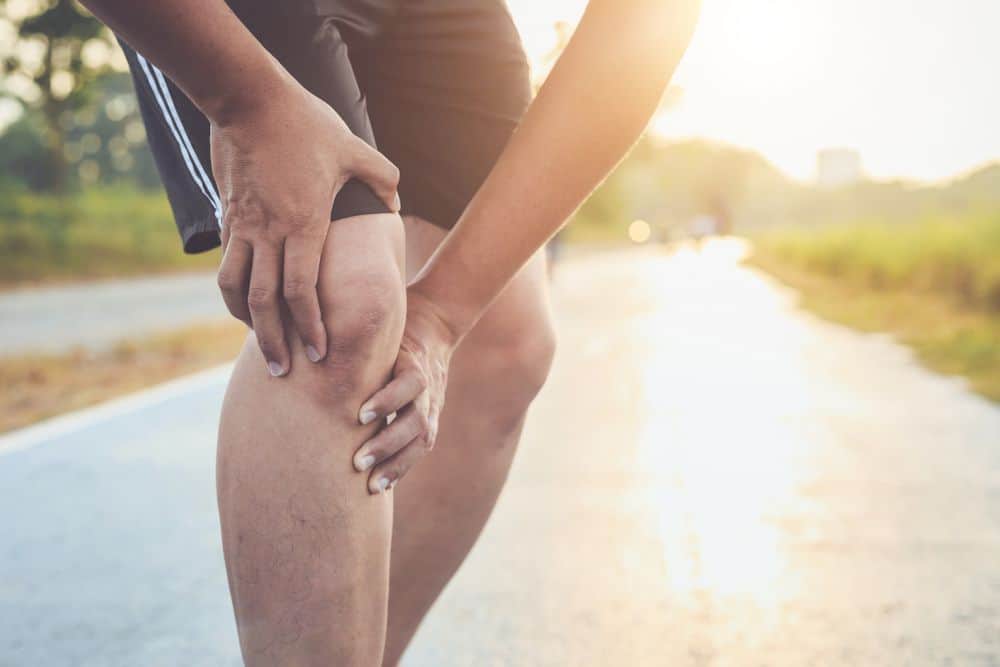
A meniscus tear is one of the most common knee injuries. It can happen to anyone, but it particularly affects people who play sport regularly and older adults. In the article below you will find out what causes it, how it presents, and how a meniscus tear can be treated properly.
Written and medically reviewed by Dr. Ion Bogdan Codorean, senior orthopaedics-traumatology physician. Updated: August 14, 2026.
Three bones meet at the knee: the tibia, the femur and the patella. The meniscus sits between the femur and the tibia and is made of fibrocartilage, which protects the articular cartilage and helps stabilise the knee and lubricate it properly. In short, the meniscus is a cartilage whose role is to cushion, stabilise and protect the knee.
Each knee has two menisci: the lateral meniscus and the medial meniscus. The lateral meniscus is shaped like the letter "O", while the medial meniscus is shaped like the letter "C"; both attach to the tibia through their anterior and posterior horns. The medial meniscus is less flexible than the lateral one, which is why tears of the medial meniscus are far more common.
Meniscus tears can occur from the following causes:
When the meniscus is injured, the knee becomes much more sensitive to pressure. Meniscal injuries fall into two types:
The most common symptoms of a meniscus tear are:
When a meniscus tear happens, people may feel a pop in the knee but can often carry on with their activity as normal. At first the pain may not be troublesome, but after two or three days the knee starts to swell.
If it is not treated properly, a fragment of the meniscus can detach and move within the joint. The knee then locks, gives way, or makes noises while walking. The pain intensifies and walking becomes difficult.
Patients who have suffered a meniscus tear should see an orthopaedic surgeon. A meniscus tear is diagnosed using the following methods:
Treatment for a meniscus tear is prescribed by the orthopaedic surgeon and depends on the type, size and location of the tear. Other factors taken into account are the patient's age and the type of activity they do.
The outer third of the meniscus has a rich blood supply and is known as the "red zone". This area can heal on its own, although surgery is sometimes necessary.
If the meniscus tear is small and the symptoms do not persist, conservative treatment alone is sufficient, without surgery. This treatment is known as the RICE protocol (Rest, Ice, Compression, Elevation) and consists of:
There are also non-steroidal anti-inflammatory medicines that can reduce pain and inflammation in the knee. These should be taken on the orthopaedic surgeon's recommendation.
If the meniscal injury is severe and the symptoms do not resolve after conservative treatment, surgery is required to heal the meniscus tear.
This is one of the most common arthroscopic procedures. It involves making an incision of about 1 cm and inserting a miniature camera. With this camera the orthopaedic surgeon can see clearly inside the knee while, through another incision, inserting the arthroscopic instruments used to repair or excise the torn portion of the meniscus.
Given how important the meniscus is to the function of the knee, it should be saved by suturing it whenever possible. The earlier the stage at which the meniscus tear is treated, the greater the chances of healing through repair.
Studies show that the risk of the meniscus failing to heal after repair is up to 20%. Even so, the long-term benefit of preserving the meniscus makes meniscal repair the best choice when dealing with a meniscus tear, particularly in children and adolescents.
This may be partial (removing the torn portion of the meniscus), subtotal or total (removing the entire meniscus). If one of the cruciate ligaments is also affected, the ligament must be treated as well, in order to prevent the possible onset of osteoarthritis.
If a portion of the meniscus is removed and cartilage damage develops, the missing portion can be replaced with an artificial meniscus implant. The ACTIFIT artificial meniscus implant is recommended when the patient has an intact meniscal rim, with the anterior and posterior horns present.
After meniscus surgery, the orthopaedic surgeon or a physiotherapist may recommend a set of rehabilitation exercises. The exercises should be performed regularly to restore mobility to the knee and, subsequently, to build muscle strength.
Depending on the orthopaedic surgeon's recommendations, the exercises can be done at home or at a specialist rehabilitation centre. The recovery and healing period varies according to the type of injury and the type of surgery.
Return to sport after these procedures depends on the type of surgery performed (meniscectomy or meniscal repair) and on the time patients devote to rehabilitation. There is a set of tests patients must pass in order to return to sport safely.
Dr. Codorean offers a precise diagnosis and a personalised treatment plan.