
Rotator cuff injuries are among the most common shoulder injuries. They occur following a significant injury, or as a result of overuse from lifting the arms above the head, from repetitive movements or from playing sport.
Written and medically reviewed by Dr. Ion Bogdan Codorean, senior orthopaedics-traumatology physician. Updated: August 14, 2026.
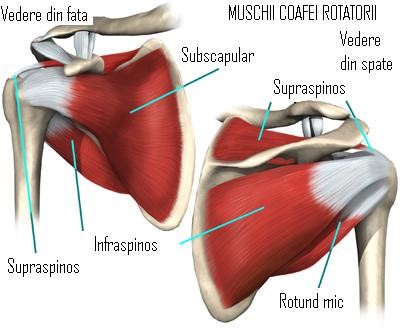
The rotator cuff is a network of four muscles and several tendons that cover the humeral head. The rotator cuff holds the humeral head in the joint and allows the arm to rotate. The four cuff muscles (supraspinatus, infraspinatus, subscapularis and teres minor) originate on the scapula and insert onto the front and outer part of the humeral head, on the greater tuberosity.
The rotator cuff can tear as a result of a single traumatic injury. The most common tears, however, result from excessive strain on this group of muscles over a period of years. Patients at increased risk are those who perform repetitive overhead movements. This includes athletes who play tennis, baseball and rowing, as well as weightlifters.
Rotator cuff tears are most frequently seen in patients over 40. Younger patients develop rotator cuff injuries following trauma or as a result of overhead overuse of the arms.
The symptoms of rotator cuff injuries include:
Pain at the front of the shoulder radiates into the outer part of the arm and may at first be mild, appearing only during demanding activities. Over time the pain increases in intensity, including at rest, and may appear when weight presses on the affected area — for example during the night.
In many cases, conservative treatment can reduce the pain and improve shoulder function. Conservative treatment options include:
The orthopaedic surgeon may recommend surgery if:
The type of operation performed depends on the size, shape and location of the tear. A partial tear may require only a smoothing procedure, known as debridement. A complete tear is repaired by suturing the two parts of the torn tendon together.
There are several ways of repairing rotator cuff injuries:
Dr. Codorean offers a precise diagnosis and a personalised treatment plan.