
Achilles Tendon Rupture

Achilles Tendon Rupture

Symptoms, Causes and Treatment for Achilles Tendon Rupture

An Achilles tendon rupture is an injury affecting the back of the leg. It occurs most frequently in people who play competitive aerobic sports, though not exclusively. In practice, any discontinuity of the Achilles tendon resulting from a sudden contraction or from sporting activity is known as an Achilles tendon rupture.

Written and medically reviewed by Dr. Ion Bogdan Codorean, senior orthopaedics-traumatology physician. Updated: August 14, 2026.

What is the Achilles tendon

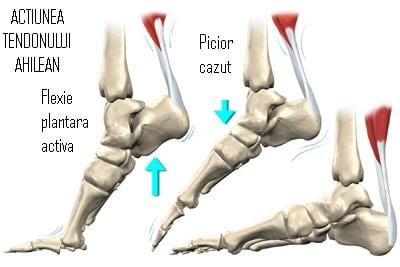
The Achilles tendon is a strong, fibrous structure that attaches the calf muscles to the heel. The calf muscles consist mainly of the soleus, lying deep, and the gastrocnemius muscles at the surface. Together they form the gastrocnemius-soleus muscle group. When they contract, these muscles pull on the Achilles tendon, raising the heel and lowering the front of the foot.

What is an Achilles tendon rupture

An Achilles tendon rupture is usually traumatic and occurs as a result of a violent contraction. The classic example is a middle-aged tennis player who overloads the tendon and suffers an injury. In some cases the rupture may be preceded by a period of tendinitis, which has the effect of weakening the tendon.

Achilles tendon ruptures can be partial — the tendon is still in one piece — or complete, presenting as two separate parts. Complete ruptures are more common than partial ones.

Causes

A considerable traumatic force is required for an Achilles tendon rupture to occur:

  • On a forceful push off the foot, during a jump or at the start of a sprint, with the knee extended
  • During a slip or fall, when the foot is thrust forward to regain balance
  • During a fall from a significant height

A weakened tendon ruptures more easily. There are several situations in which the tendon may be weakened:

  • Tendinitis. Inflammation of the Achilles tendon weakens it. Achilles tendinitis is more common in people who run or play sports involving jumping.
  • Chronic diseases. Weakened tendons can also result from diseases that interrupt the blood supply. Such chronic conditions include chronic kidney failure, gout, leukaemia, rheumatoid arthritis, systemic lupus erythematosus and diabetes.
  • Steroid use. This has been associated with weakening of the tendons.

Symptoms

  • Sudden, severe pain at the back of the ankle or calf
  • A sound like a snap
  • A visible gap appearing a few centimetres above the heel
  • The initial pain and swelling may be followed by deformity of the area
  • The pain can disappear quickly and the smaller tendons may maintain plantar flexion, but without the Achilles tendon this is very difficult
  • Standing on tiptoe and using the calf muscles while walking are impossible

Treatment

If you have been diagnosed with an Achilles tendon rupture, you should see a good orthopaedic surgeon urgently for treatment.

The aim of treatment is to restore the length and tension of the tendon and to return motor function to normal.

Conservative treatment of an Achilles tendon rupture

The RICE protocol (Rest, Ice, Compression, Elevation) comprises:

  • Rest: the activity that caused the injury must be stopped. The orthopaedic surgeon may recommend using a crutch to avoid loading the affected limb.
  • Ice: massage using ice packs for 20 minutes, several times a day, not applied directly to the skin.
  • Compression: an elastic bandage to prevent further swelling.
  • Elevation of the affected limb above heart level, again to reduce swelling.

Immobilisation. The orthopaedic surgeon may recommend wearing a brace or a plaster cast. Immobilisation can last between 3 and 6 weeks.

Surgical treatment of an Achilles tendon rupture

Because in most cases an Achilles tendon rupture is complete, it requires surgery.

The operation:

  • Involves an incision in the skin and suturing the free ends of the torn tendon.
  • Has a lower rate of re-rupture than conservative treatment.
  • Allows a faster return to pre-injury activities than conservative treatment.
  • Is the preferred treatment for competitive athletes and for patients with physically demanding activities.

Book a Consultation

Dr. Codorean offers a precise diagnosis and a personalised treatment plan.

Book Now +4021 9885
Call Book Now